




Key Takeaways
- Dietary supplements are regulated differently from pharmaceuticals, and product quality is not pre-approved prior to sale.
- Third-party certifications (e.g., NSF, USP, Informed Sport) may provide additional context regarding label accuracy and manufacturing standards.
- Transparent labeling — including individual ingredient amounts — may provide more context for evaluation compared to undisclosed blends.
- Marketing terms such as “natural” or “pharmaceutical grade” are not standardized, and should be interpreted with context.
The supplement industry has grown significantly in recent years, offering a wide range of products across health and wellness categories.
While some supplements and ingredients have been studied in scientific research, understanding how to evaluate product quality is essential. Unlike pharmaceuticals, dietary supplements follow a different regulatory framework, which places greater importance on informed consumer decision-making.
Learning how to read a supplement label can help provide context when evaluating formulation transparency and product information.
Understanding the Supplement Facts Panel
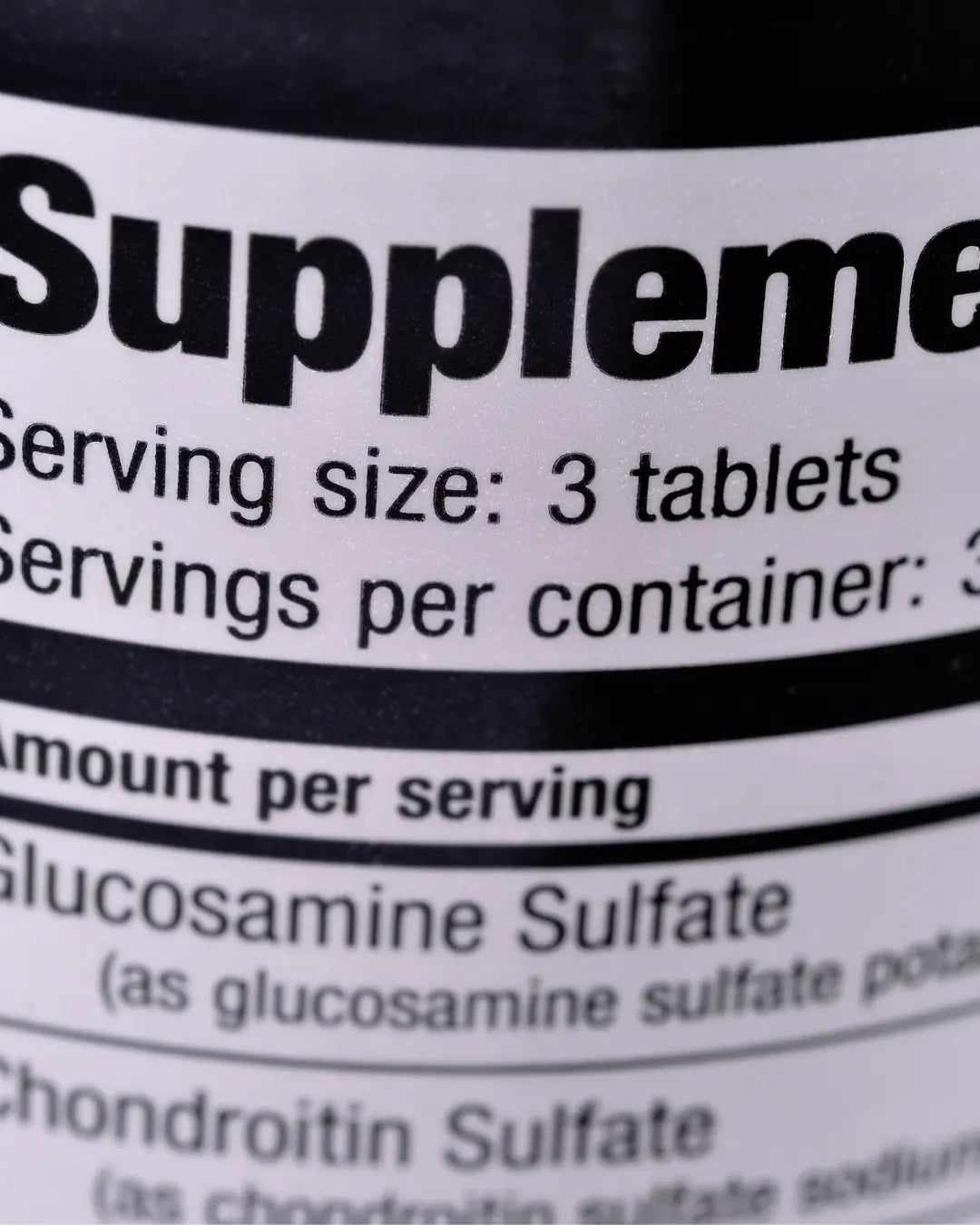
Every supplement includes a Supplement Facts panel, which provides key details about its composition.
Serving Size and Servings Per Container
This section defines the amount considered one serving.
It is important to evaluate how many units (capsules, scoops) make up a serving, as front-label claims may reflect totals that require multiple servings.
Amount Per Serving
This lists the quantity of each ingredient included.
When individual amounts are disclosed, it allows for comparison with ranges commonly explored in research.
If ingredients are grouped into a single blend without individual breakdowns, it becomes more difficult to evaluate their relative contribution.
% Daily Value
For vitamins and minerals, this indicates how a serving compares to established daily intake guidelines.
Values above 100% are not uncommon, particularly for water-soluble vitamins. For fat-soluble vitamins, higher amounts may warrant additional consideration.
For many bioactive compounds, no Daily Value has been established, and interpretation relies on available research.
Other Ingredients
This section includes inactive components such as capsule materials, stabilizers, or flavoring agents.
Common ingredients may include cellulose or silicon dioxide. Reviewing this section can help identify added substances beyond the primary formulation.
Understanding Ingredient Blends
Some products group ingredients into proprietary blends, listing a total amount without specifying individual quantities.
While this approach is permitted, it limits the ability to assess how much of each ingredient is included.
Transparent formulations that disclose individual ingredient amounts provide greater clarity for evaluation.
Third-Party Testing and Certifications
Third-party testing involves independent verification of certain aspects of a product.
Different certifications focus on different criteria:
- NSF International — includes testing for label accuracy, contaminants, and substances restricted in sport
- USP Verified — evaluates ingredient identity, strength, and purity
- Informed Sport / Informed Choice — focuses on substances restricted in athletic competition
Manufacturing standards such as GMP (Good Manufacturing Practices) indicate that facilities follow standardized production processes, though they do not replace product-level testing.
Evaluating Ingredient Amounts
When reviewing a supplement, one approach is to compare listed ingredient amounts with ranges that have been explored in research.
For many ingredients, studies examine specific dosing ranges under controlled conditions. Products may vary in how closely they align with those ranges.
This comparison can help provide context when evaluating formulations.
Formulation Approach
Some products include a large number of ingredients across multiple categories.
While this may appear comprehensive, formulation considerations often involve balancing ingredient selection with appropriate dosing and interactions.
Products that emphasize clarity, consistency, and defined formulation goals may be easier to evaluate.
Pricing and Quality Considerations
Supplement pricing can reflect multiple factors, including:
- Ingredient sourcing and standardization
- Use of branded or patented compounds
- Manufacturing processes
- Testing and quality control
Price alone does not determine quality, but transparency and formulation approach can provide useful context.
The Bottom Line
Reading a supplement label involves understanding both what is included and how it is presented.
Transparent labeling, third-party verification, and alignment with research-informed ranges can help guide evaluation.
A structured approach to reviewing supplement information supports more informed decision-making.
Evoria products disclose individual ingredient amounts and use branded ingredient forms where applicable, including KSM-66®, BioPerine®, and LipoAvail®. Products are manufactured in facilities that follow GMP (Good Manufacturing Practices) standards. View supplement facts panels for available products.
Ready to put the science into practice?
Evoria's Daily Essentials provides a comprehensive foundation of essential nutrients to support whole-body balance and vitality. Shop Daily Essentials →
Related Reading
- 5 Supplement Stacking Mistakes That Cancel Out Your Results
- Greens Powders: What to Look for and What to Avoid
- Liposomal Supplements: Do They Actually Improve Absorption?
- How to Build a Supplement Routine That Actually Works
*These statements have not been evaluated by the Food and Drug Administration. This product is not intended to diagnose, treat, cure, or prevent any disease. Consult your healthcare provider before starting any supplement regimen.
Share:
Electrolytes Are Not Just for Athletes: Why Daily Hydration Goes Beyond Water
The Cortisol-Weight Connection: How Chronic Stress Affects Your Body Composition