




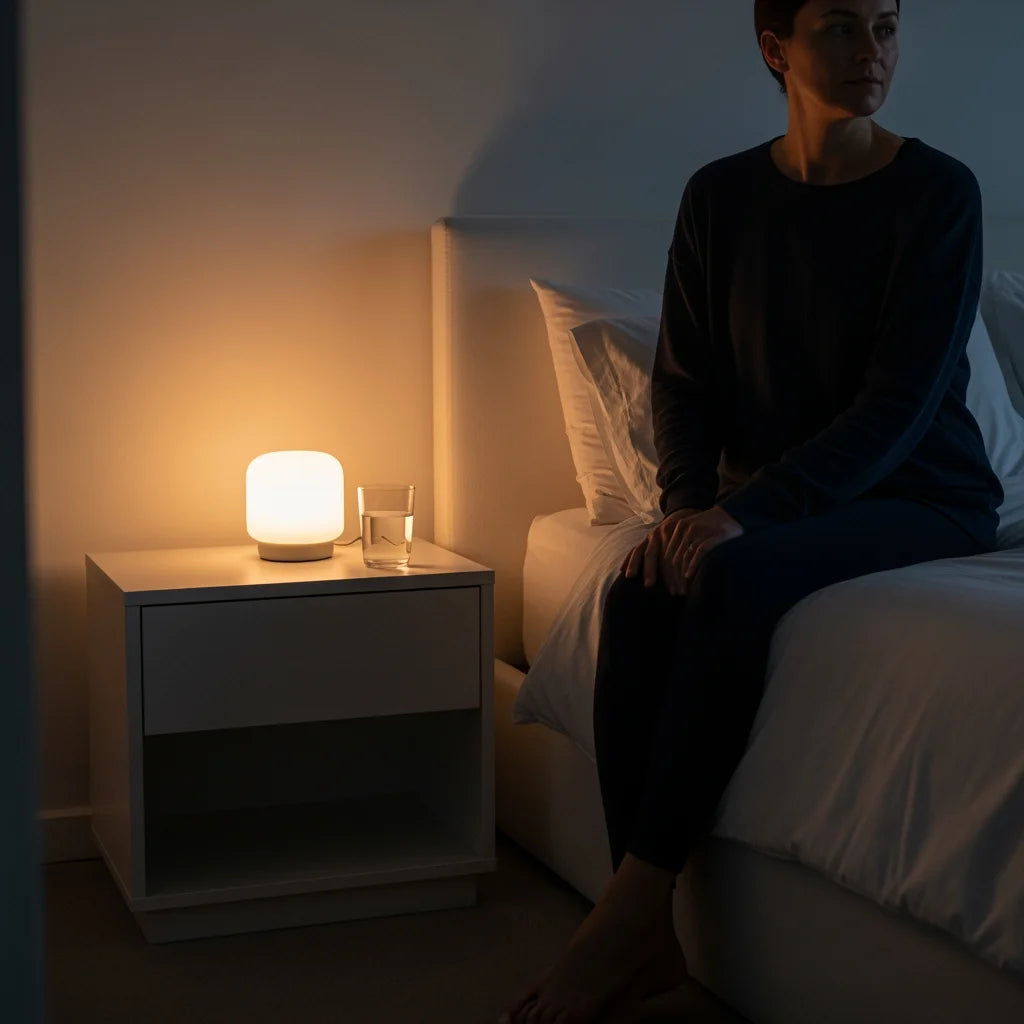
It's 10:47 PM. You've told yourself three times you'd be in bed by 11. Instead, you're scrolling, answering one last email, or caught in a Netflix episode that "only has 12 minutes left." When your head finally hits the pillow, your mind is still running — replaying conversations, queuing tomorrow's tasks, wondering why you can't just switch off.
Sound familiar? You're not alone. The American Academy of Sleep Medicine estimates that roughly 30% of adults experience occasional insomnia symptoms, with difficulty winding down consistently ranking among the most common complaints. But here's what the research is making increasingly clear: sleep quality isn't just about what happens in bed — it's heavily influenced by what you do in the 60 to 90 minutes before you get there.
Key Takeaways
- A consistent pre-sleep wind-down period is one of the most evidence-supported, zero-cost tools for improving subjective sleep quality.
- Large meta-analyses show that improving sleep causally improves mental health — reducing depression, anxiety, and stress.
- Finishing your last substantial meal at least 3 hours before bed is associated with better sleep quality and shorter sleep latency.
- Resistance training and general physical activity, when done earlier in the day, rank among the most effective non-pharmacological strategies for sleep improvement.
- Supplements like magnesium may support relaxation, but they work best as part of a broader routine — not as a substitute for one.
The Science: Why Your Evening Window Matters
The hour before sleep isn't just "idle time" — it's a critical physiological transition. During this period, your body begins shifting from sympathetic (fight-or-flight) to parasympathetic (rest-and-digest) dominance. Core body temperature starts to drop. Melatonin secretion ramps up. Cortisol naturally declines. These processes don't happen on command; they need conditions.
One of the most compelling bodies of evidence comes from a 2021 meta-analysis of 65 randomized controlled trials involving over 8,600 participants, published in Sleep Medicine Reviews. The researchers found that when interventions successfully improved sleep quality, there were causal downstream benefits for mental health: depression improved (effect size g = −0.63), anxiety dropped (g = −0.51), and stress declined (g = −0.42). Perhaps most notably, they identified a dose-response relationship — the larger the sleep improvement, the larger the mental health benefit.Scott et al., 2021
This challenges the old assumption that poor sleep is just a symptom of anxiety or depression. The evidence now suggests the arrow points both ways — and sometimes, sleep is the more actionable lever.
Meal Timing: The Overlooked Variable
Among the most actionable — and most overlooked — components of an evening routine is when you stop eating. A large 2024 observational study published in Sleep Science examined the association between evening eating patterns and sleep outcomes. The findings were striking: for each additional hour later that participants ate their last meal, the odds of poor sleep quality increased by roughly 21%, the odds of short sleep duration rose by 30%, and the likelihood of insomnia climbed by 12%.Silva et al., 2024
The study also identified an apparent sweet spot: the shortest sleep latency (time to fall asleep) was observed when the last eating event occurred around 8:00 PM, roughly 7–8 hours before the midpoint of sleep. Participants whose dinner was the largest meal of the day — and who consumed caffeine or sugary foods after 6:00 PM — had consistently worse outcomes across nearly every sleep metric.
This doesn't mean you need to eat dinner at 5:30 PM every night. But the data suggest that a 2–3 hour buffer between your last substantial meal and bedtime is a high-impact, zero-cost adjustment.
Movement as a Sleep Intervention
Exercise and sleep have a bidirectional relationship, but a 2024 network meta-analysis published in PLOS ONE added important nuance. Across randomized controlled trials in nonelderly adults, researchers ranked multiple non-pharmacological strategies for improving sleep quality. Resistance training emerged as the single most effective intervention, outperforming general physical activity, nutritional interventions, and combinations thereof.Oki et al., 2024
The key caveat: timing matters. Vigorous exercise within 60–90 minutes of bedtime can elevate core temperature and heart rate, potentially delaying sleep onset in some individuals. But moderate activity earlier in the day — even a brisk afternoon walk or an early evening strength session — consistently shows protective effects on sleep architecture.
Building Your Wind-Down Protocol
You don't need biohacking gadgets or elaborate rituals. The most robust evening routines share a few common elements, and the evidence supports starting with the basics:
- Set a fixed wind-down start time. Pick a time — say, 9:30 PM — and treat it as non-negotiable. Consistency helps entrain your circadian rhythm. Aim for 30–60 minutes of deliberate wind-down before your target bedtime.
- Dim the lights. Light exposure, particularly blue wavelengths from screens, suppresses melatonin. Switch to warm, low-intensity lighting at least 30 minutes before bed. If you must use devices, enable night mode and keep brightness low — but ideally, switch to non-screen activities.
- Finish eating with a buffer. Target your last substantial meal at least 2–3 hours before bed. If you're hungry close to bedtime, a light, low-sugar snack (a banana, a small handful of almonds) is preferable to a heavy meal.
- Choose low-arousal activities. Reading fiction, gentle stretching, journaling, or listening to quiet music are all evidence-aligned. Avoid work email, intense problem-solving, or emotionally charged conversations in the final hour.
- Keep the bedroom cool and dark. The optimal sleep temperature for most people is 65–68°F (18–20°C). Blackout curtains or a comfortable eye mask can help if your environment isn't naturally dark.
Where Supplements Fit In
No supplement can replace a consistent evening routine, but certain nutrients may support the body's natural relaxation pathways. Magnesium, for example, plays a role in regulating the parasympathetic nervous system and binds to GABA receptors — the same receptors targeted by the brain's primary calming neurotransmitter.
Evoria Health's Night Recovery formula includes magnesium bisglycinate, a highly bioavailable form of magnesium, alongside KSM-66® Ashwagandha and a digestive support blend. It's designed to complement — not substitute for — the behavioral foundation outlined above. If you're building a nighttime routine from scratch, start with the habits. Once the structure is in place, supplementation may offer additional support.*
*These statements have not been evaluated by the Food and Drug Administration. This product is not intended to diagnose, treat, cure, or prevent any disease.
Frequently Asked Questions
How long before bed should I start my wind-down routine?
Most sleep researchers recommend 30–60 minutes of deliberate wind-down time. The key is consistency — doing it at roughly the same time each night matters more than the exact duration.
Is it bad to exercise in the evening?
Not necessarily. Moderate exercise in the early evening is generally fine and may even improve sleep for some people. The concern is primarily with vigorous exercise within 60–90 minutes of bedtime, which can elevate core temperature and delay sleep onset. Listen to your body — if evening workouts leave you wired, shift them earlier.
Does screen time really affect sleep that much?
Yes — the evidence is fairly consistent. Blue light from screens suppresses melatonin production, and the content itself (social media, news, work) can be cognitively activating. If you can't avoid screens entirely, use night mode, reduce brightness, and avoid stimulating content in the last 30–60 minutes.
What if I follow a routine and still can't sleep?
If you've consistently practiced good sleep hygiene for several weeks without improvement, it may be worth consulting a healthcare provider. Persistent insomnia can have underlying causes — including sleep apnea, anxiety disorders, or circadian rhythm disruptions — that behavioral strategies alone may not fully address. Cognitive Behavioral Therapy for Insomnia (CBT-I) is considered the gold-standard first-line treatment.
Can a nighttime supplement replace a routine?
No. Supplements may support relaxation and sleep quality, but they work best as part of a broader behavioral foundation. Think of them as a complement to consistent habits — not a shortcut around them.
References
- Scott AJ, Webb TL, Martyn-St James M, Rowse G, Weich S. Improving sleep quality leads to better mental health: A meta-analysis of randomised controlled trials. Sleep Medicine Reviews, 2021;60:101556.
- Silva VM, et al. Association of Evening Eating with Sleep Quality and Insomnia. Sleep Science, 2024;17(4):e381–e391.
- Oki T, Imai T, Takahashi M, et al. The effects of nonpharmacological sleep hygiene on sleep quality in nonelderly individuals: A systematic review and network meta-analysis of randomized controlled trials. PLOS ONE, 2024;19(6):e0301616.
Share:
Gut Health and Probiotics: Simple Habits That Make a Difference
Why Am I Still Tired After 8 Hours of Sleep?