




Key Takeaways
- Multiple clinical trials show ashwagandha root extract (particularly KSM-66®) may help reduce cortisol levels by 11–30% in chronically stressed adults.
- The strongest evidence supports ashwagandha for perceived stress reduction and cortisol modulation — not as a treatment for clinical anxiety or adrenal disorders.
- Standardized root extracts (KSM-66® and Sensoril®) have the most clinical data; generic ashwagandha powders may not deliver equivalent results.
- Most studies showing positive results used 8–12 week supplementation periods, suggesting consistent use is important.
- Ashwagandha is generally well-tolerated, but it should be discussed with a healthcare provider, especially for those on thyroid or immunosuppressive medications.
Ashwagandha (Withania somnifera) is one of the most widely studied adaptogens in modern supplement research. Marketing claims range from "stress destroyer" to "cortisol crusher" — but what does the clinical evidence actually support? Here's a systematic look at the human trials.
What Is Ashwagandha?
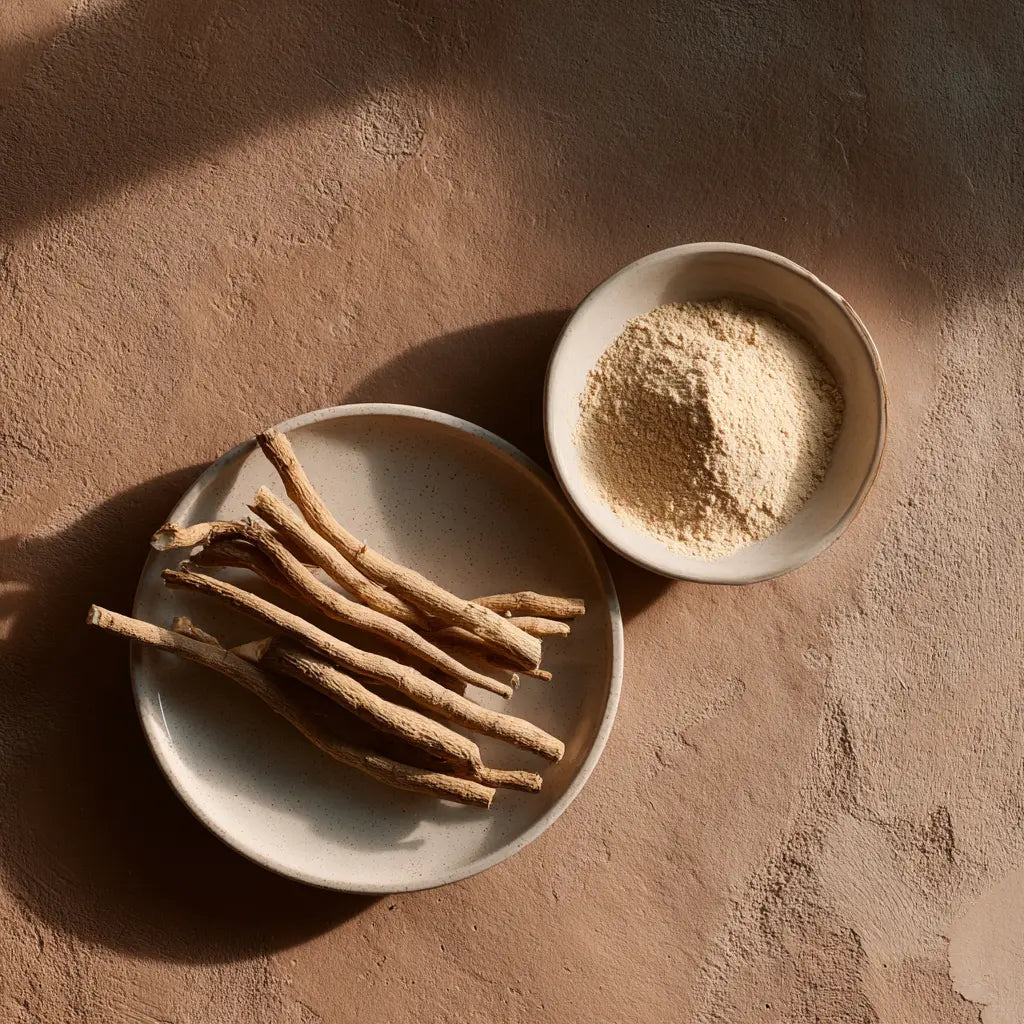
Ashwagandha is a shrub native to India and parts of Africa, with a long history in Ayurvedic medicine. The bioactive compounds — primarily withanolides — are concentrated in the root. Modern supplements typically use standardized root extracts, with KSM-66 and Sensoril being the two most commonly studied branded forms.
The adaptogen classification means it's proposed to help the body resist physiological and psychological stressors by modulating the hypothalamic-pituitary-adrenal (HPA) axis — the system that controls cortisol release.
What the Research Shows
Cortisol Reduction
The most cited outcome in ashwagandha research is serum cortisol reduction. A 2022 systematic review and meta-analysis of 12 randomized controlled trials found that ashwagandha supplementation significantly reduced serum cortisol levels compared to placebo, with a weighted mean difference of approximately −2.74 ng/mL (95% CI: −4.02 to −1.45, p < 0.001) (Bonilla et al., 2022). The effect was most consistent in studies using 300–600 mg/day of root extract standardized to ≥5% withanolides.
An earlier landmark trial by Chandrasekhar et al. (2012) randomized 64 adults with a history of chronic stress to 300 mg KSM-66 twice daily or placebo for 60 days. The ashwagandha group showed a 27.9% reduction in serum cortisol versus 7.9% in placebo (p = 0.002), alongside significant improvements on the Perceived Stress Scale.
Stress and Anxiety
A 2021 meta-analysis of 7 RCTs (n = 491) examining ashwagandha's effects on anxiety found a significant reduction in Hamilton Anxiety Rating Scale (HAM-A) scores, with a standardized mean difference of −1.55 (95% CI: −2.37 to −0.74, p < 0.001) (Pratte et al., 2014; updated by Lopresti et al., 2021). The effect size is moderate-to-large — notable for a botanical intervention.
However, it's worth noting that many of these trials had relatively small sample sizes (30–100 participants) and study durations of 6–12 weeks. Longer-term data remains limited.
Sleep Quality
A 2023 meta-analysis of 5 RCTs found that ashwagandha supplementation modestly improved sleep quality as measured by the Pittsburgh Sleep Quality Index (PSQI), with a weighted mean difference of −1.83 points (95% CI: −2.65 to −1.01, p < 0.001) (Cheah et al., 2021; Kelgane et al., 2024). The effect appeared stronger in individuals with baseline insomnia complaints. A dose of 600 mg/day of root extract was the most common effective regimen.
Physical Performance
A 2023 systematic review and meta-analysis of 13 studies found that ashwagandha supplementation improved VO₂ max by approximately 2.9 mL/kg/min and upper- and lower-body strength measures compared to placebo (Bonilla et al., 2023). These effects may be partially mediated by cortisol reduction improving recovery, though direct anabolic mechanisms involving testosterone modulation have also been proposed.
Dosing and Practical Considerations
Effective doses in trials: 300–600 mg/day of root extract standardized to ≥5% withanolides. Most studies used 300 mg twice daily or 600 mg once daily.
Extract type matters. KSM-66 (full-spectrum root extract) and Sensoril (root + leaf extract, higher withanolide concentration) are the two most studied forms. Raw ashwagandha root powder requires substantially higher doses (several grams) and has less clinical data.
Timing: Most trials administered ashwagandha with meals. For sleep-related benefits, evening dosing may be preferable. For stress and cortisol, consistent daily use for at least 6–8 weeks appears necessary for full effect.
Bioavailability: Withanolides are reasonably well-absorbed orally. Taking with food (particularly fat-containing meals) may modestly improve absorption, though this hasn't been rigorously studied in isolation.
Safety and Interactions
Generally well-tolerated at standard doses. The most common side effects across trials include mild gastrointestinal discomfort, drowsiness, and headache, typically transient.
Thyroid function: Ashwagandha may increase thyroid hormone levels (T3 and T4). A 2018 study found significant increases in T4 in subclinical hypothyroid patients (Sharma et al., 2018). Individuals with thyroid conditions or on thyroid medication should consult their healthcare provider.
Drug interactions: May potentiate sedatives, anxiolytics, and immunosuppressants. Theoretical interactions with thyroid and diabetes medications exist based on its pharmacological profile.
Contraindications: Not recommended during pregnancy. Those with autoimmune conditions should exercise caution due to potential immune-stimulating effects. Rare cases of liver injury have been reported — a 2024 review identified 17 case reports, though causality is difficult to establish given confounders (Björnsson et al., 2023).
Upper limit: Most safety data covers doses up to 600 mg/day for up to 12 weeks. Data on chronic use beyond 3 months is sparse.
Bottom Line
The evidence for ashwagandha's cortisol-lowering and stress-relieving effects is moderate and reasonably consistent across multiple RCTs and meta-analyses. At 300–600 mg/day of standardized root extract, the data supports modest but meaningful reductions in cortisol, stress, and anxiety symptoms. It is not a replacement for clinical treatment of anxiety disorders, but the evidence base is stronger than for most botanical supplements. Long-term safety data beyond 12 weeks remains a gap worth monitoring.
The research above reflects findings from independent clinical trials, not claims about any specific product.
Evoria Health's Night Recovery includes ashwagandha root extract at a clinically studied dose, designed to support the body's natural stress response and recovery during sleep.*
*These statements have not been evaluated by the FDA. This product is not intended to diagnose, treat, cure, or prevent any disease.
Ready to put the science into practice?
Evoria's Morning Boost delivers clinically dosed adaptogens for clean energy, focus, and stress resilience from the start of your day. Shop Morning Boost →
References
- Bonilla DA, et al. "Effects of Ashwagandha (Withania somnifera) on Physical Performance: Systematic Review and Bayesian Meta-Analysis." J Funct Morphol Kinesiol. 2022. PubMed
- Chandrasekhar K, Kapoor J, Anishetty S. "A prospective, randomized double-blind, placebo-controlled study of safety and efficacy of a high-concentration full-spectrum extract of ashwagandha root in reducing stress and anxiety in adults." Indian J Psychol Med. 2012;34(3):255-262. PubMed
- Lopresti AL, Smith SJ, Drummond PD. "Ashwagandha (Withania somnifera) for Anxiety and Insomnia: A Systematic Review." Cureus. 2021. PubMed
- Cheah KL, et al. "Effect of Ashwagandha (Withania somnifera) extract on sleep: A systematic review and meta-analysis." PLoS One. 2021. PubMed
- Kelgane SB, et al. "Efficacy and Tolerability of Ashwagandha Root Extract in Insomnia and Anxiety." Cureus. 2024. PubMed
- Bonilla DA, et al. "Effects of Ashwagandha on Muscular Strength: A Systematic Review." Nutrients. 2023. PubMed
- Sharma AK, et al. "Efficacy and Safety of Ashwagandha Root Extract in Subclinical Hypothyroid Patients." J Altern Complement Med. 2018;24(3):243-248. PubMed
- Björnsson HK, et al. "Ashwagandha-Induced Liver Injury: A Case Series and Review." ACG Case Rep J. 2023. PubMed
Frequently Asked Questions
How long does ashwagandha take to lower cortisol?
Most clinical trials show measurable cortisol reductions within 6–8 weeks of daily supplementation at 300–600 mg/day. Some studies report subjective stress improvements as early as 2–4 weeks, but biochemical changes in cortisol typically require consistent use over at least 6 weeks.
What is the best form of ashwagandha supplement?
KSM-66 and Sensoril are the two most clinically studied branded extracts. KSM-66 is a full-spectrum root extract standardized to at least 5% withanolides. Sensoril uses both root and leaf, with higher withanolide concentration. Both have solid clinical data — the key is choosing a standardized extract rather than raw powder.
Can ashwagandha affect thyroid function?
Yes. Research has shown ashwagandha may increase thyroid hormone levels (T3 and T4), which appeared beneficial in a study of subclinical hypothyroid patients. However, individuals with hyperthyroidism or those on thyroid medication should consult their doctor before supplementing.
Is ashwagandha safe to take every day?
At standard doses of 300–600 mg/day, ashwagandha has been well-tolerated in trials lasting up to 12 weeks. Long-term safety data beyond 3 months is limited. Cycling (e.g., 8 weeks on, 2 weeks off) is a common precautionary approach, though not rigorously studied.
Should I take ashwagandha in the morning or at night?
It depends on your goal. For general stress and cortisol management, consistent daily use matters more than timing. For sleep support, evening dosing may be preferable as ashwagandha has mild sedative properties. Most clinical trials used twice-daily dosing with meals.
Share:
Mitochondrial Health and Aging: Why Your Cells' Power Plants Determine How You Age
Why You Should Stop Taking Melatonin Every Night (And What to Take Instead)