




Key Takeaways
- Mitochondria produce over 90% of cellular energy (ATP), and their decline with age is associated with reduced physiological performance and slower recovery.
- NAD+ levels decrease significantly with age, and this decline is closely linked to reduced mitochondrial efficiency and cellular repair capacity.
- Key compounds being studied for mitochondrial support include NMN (an NAD+ precursor), CoQ10, and PQQ, each targeting different aspects of mitochondrial function.
- Lifestyle factors — including exercise, sleep, and caloric balance — have a significant impact on mitochondrial health and work synergistically with targeted supplementation.
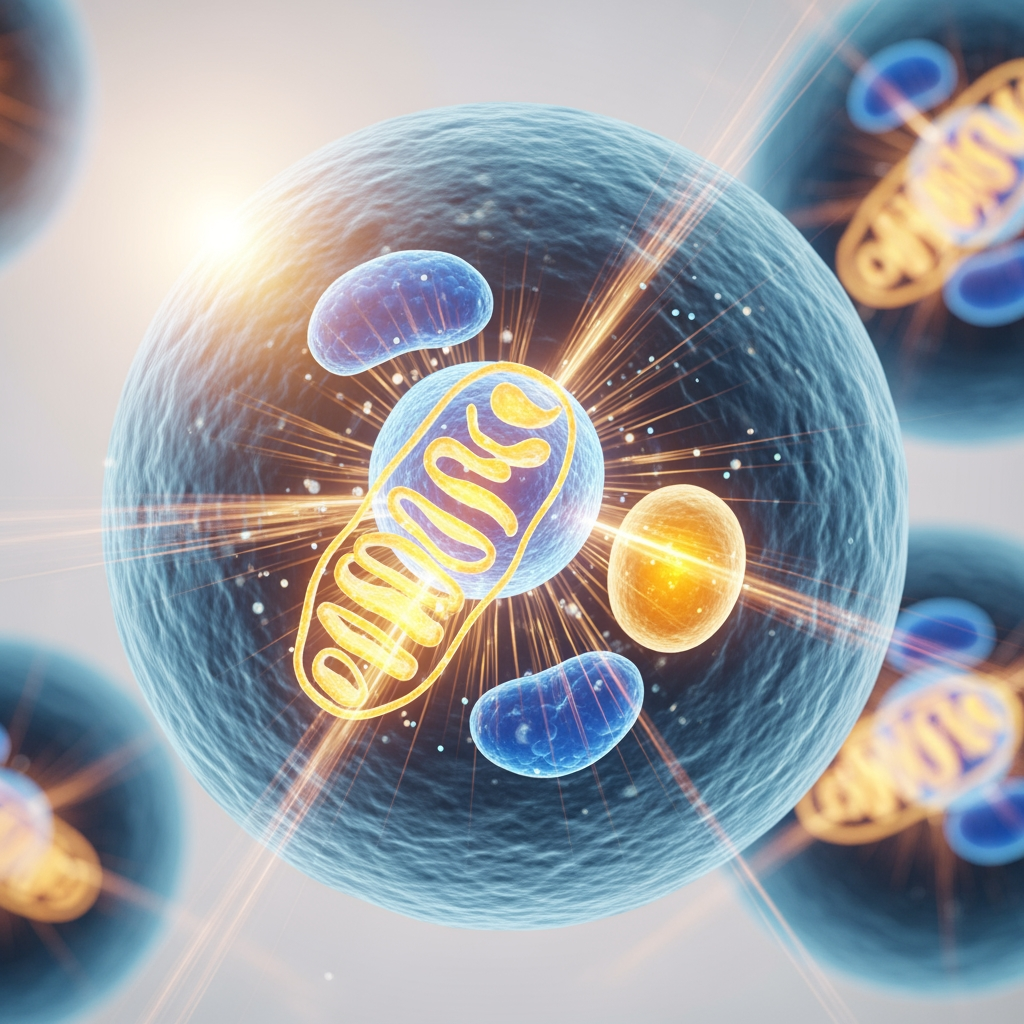
Mitochondria are structures within cells responsible for producing ATP, the form of energy that supports processes ranging from muscle contraction to cellular signaling.
Because of this central role, mitochondrial function is closely linked to how cells generate and use energy.
Research over the past decade has increasingly explored how mitochondrial function changes over time and how it relates to broader aspects of physiological performance and recovery. The 2026 NADRESTORE Phase 2 trial (published in Nature Aging) provided the most detailed look yet at how NAD+ precursor supplementation affects mitochondrial NAD+ levels in human skeletal muscle — confirming that dosing strategy matters significantly for tissue-level results.
What Mitochondria Do
Mitochondria generate energy through a process known as oxidative phosphorylation.
This process relies on several key components:
- NAD+, which acts as an electron carrier
- CoQ10, which helps transfer electrons within the system
- Oxygen, which serves as the final electron acceptor
In addition to energy production, mitochondria are involved in:
- Cellular signaling pathways
- Regulation of programmed cell processes
- Reactive oxygen species (ROS) balance
- Aspects of metabolic and immune function
These functions help explain why mitochondrial activity is often discussed in the context of overall cellular performance.
How Mitochondrial Function Changes Over Time
Research suggests that mitochondrial function may change with age due to several interacting factors:
- Changes in NAD+ availability, which may influence energy-related pathways
- Accumulation of oxidative stress, affecting mitochondrial components
- Alterations in cellular maintenance processes, including the removal of damaged mitochondria
- Shifts in mitochondrial biogenesis, the process of creating new mitochondria
These changes do not occur in isolation, and their impact may vary between individuals depending on lifestyle and overall health.
Energy Production and Cellular Efficiency
Because mitochondria are responsible for ATP production, changes in mitochondrial function may influence how efficiently cells produce energy.
This may be reflected in areas such as:
- Physical performance and recovery
- Cognitive function and mental fatigue
- Overall energy consistency
However, these outcomes are influenced by multiple factors, including sleep, nutrition, and physical activity.
What Research Suggests About Supporting Mitochondrial Function
Several approaches have been studied in relation to mitochondrial pathways:
1. NAD+ Support
NAD+ plays a central role in cellular energy metabolism.
Research on NAD+ precursors (such as NMN and NR) has shown that supplementation can increase circulating NAD+ levels. The downstream effects on broader physiological outcomes continue to be studied. Read our comprehensive guide to NAD+ supplements →
2. Mitochondrial Biogenesis
Compounds such as PQQ have been studied for their role in pathways related to mitochondrial formation.
Lifestyle factors — particularly exercise — remain among the most well-established ways to support mitochondrial biogenesis.
3. Electron Transport Support
CoQ10 is involved in the electron transport chain, a key step in ATP production.
Other compounds, such as resveratrol, have been studied for their interaction with cellular signaling pathways associated with metabolic regulation. Learn more about trans-resveratrol →
4. Cellular Maintenance Processes
Processes that regulate the removal and recycling of cellular components, including mitochondria, are an area of ongoing research.
Certain compounds have been studied in this context, though evidence in humans continues to develop.
5. Physical Activity
Exercise is consistently associated with positive effects on mitochondrial function.
It influences multiple pathways simultaneously, including energy metabolism, mitochondrial formation, and cellular signaling.
A Systems Perspective
Mitochondrial function involves multiple interconnected processes rather than a single pathway.
As a result, approaches that consider multiple factors — including nutrient status, physical activity, and overall lifestyle — may be more relevant than focusing on a single intervention.
The Bottom Line
Mitochondria play a central role in cellular energy production and overall physiological function.
Research suggests that mitochondrial activity may change over time and that both lifestyle factors and targeted nutritional approaches may help support these processes.
A balanced approach focuses on consistency, overall health habits, and evidence-based supplementation where appropriate.
Ready to put the science into practice?
Evoria's Daily Essentials provides a comprehensive foundation of essential nutrients to support whole-body balance and vitality. Shop Daily Essentials →
References
1. López-Otín C, Blasco MA, Partridge L, Serrano M, Kroemer G. The hallmarks of aging. Cell. 2013;153(6):1194-1217. doi:10.1016/j.cell.2013.05.039
2. Lautrup S, Sinclair DA, Mattson MP, Fang EF. NAD+ in brain aging and neurodegenerative disorders. Cell Metab. 2019;30(4):630-655. doi:10.1016/j.cmet.2019.09.001
3. Bua E, Johnson J, Herbst A, et al. Mitochondrial DNA-deletion mutations accumulate intracellularly to detrimental levels in aged human skeletal muscle fibers. Am J Hum Genet. 2006;79(3):469-480. doi:10.1086/507132
4. Gomes AP, Price NL, Ling AJY, et al. Declining NAD+ induces a pseudohypoxic state disrupting nuclear-mitochondrial communication during aging. Cell. 2013;155(7):1624-1638. doi:10.1016/j.cell.2013.11.037
5. Robinson MM, Dasari S, Konopka AR, et al. Enhanced protein translation underlies improved metabolic and physical adaptations to different exercise training modes in young and old humans. Cell Metab. 2017;25(3):581-592. doi:10.1016/j.cmet.2017.02.009
6. Andreux PA, Blanco-Bose W, Ryu D, et al. The mitophagy activator urolithin A is safe and induces a molecular signature of improved mitochondrial and cellular health in humans. Nat Metab. 2019;1(6):595-603. doi:10.1038/s42255-019-0073-4
7. NADRESTORE Phase 2 Trial. Split-dose NMN and skeletal muscle NAD+ elevation. Nature Aging. 2026. (Results presented at 2026 geroscience conference; full publication pending.)
Frequently Asked Questions
What are mitochondria and why do they matter?
Mitochondria are the "power plants" inside your cells that produce over 90% of your body's energy in the form of ATP. They also regulate cellular signaling, programmed cell processes, and reactive oxygen species balance. When mitochondrial function declines — which happens naturally with age — it affects everything from physical performance to cognitive function.
Does NAD+ supplementation actually improve mitochondrial function?
NAD+ precursors (like NMN and NR) have been shown to reliably raise NAD+ levels in both blood and tissue. The 2026 NADRESTORE Phase 2 trial confirmed significant skeletal muscle NAD+ elevation with split-dose NMN. However, translating these NAD+ increases into measurable anti-aging or functional benefits in healthy adults remains an active area of research — current evidence shows the strongest effects in individuals with metabolic dysfunction rather than healthy populations.
What is the best supplement for mitochondrial health?
There is no single "best" supplement. A multi-pathway approach is generally recommended: NAD+ support (via NMN/NR), mitochondrial biogenesis promoters (like PQQ), electron transport support (CoQ10), and cellular maintenance support (compounds that encourage mitophagy). These work best alongside exercise, quality sleep, and proper nutrition.
Can lifestyle changes alone support mitochondrial health?
Yes, and they should form the foundation. Exercise is the most well-established intervention for mitochondrial biogenesis and function. Adequate sleep, caloric balance, and stress management also play significant roles. Supplements work best as amplifiers of a healthy lifestyle, not replacements for one.
Evoria's Total Longevity is designed as a mitochondrial support system: LipoAvail NAD+ addresses the primary electron carrier decline, PQQ stimulates new mitochondria formation, Trans-Resveratrol activates sirtuin quality control, Spermidine supports mitophagy, and BioPerine enhances absorption. See the full formulation.
Related Reading
- The Complete Guide to NAD+ Supplements
- Trans-Resveratrol: Benefits, Dosing, and Research
- The Best Morning Supplement Routine for Energy and Focus
- Liposomal Supplements: Do They Actually Improve Absorption?
- How to Build a Supplement Routine That Actually Works
- 5 Supplement Stacking Mistakes That Cancel Out Your Results
*These statements have not been evaluated by the Food and Drug Administration. This product is not intended to diagnose, treat, cure, or prevent any disease. Consult your healthcare provider before starting any supplement regimen.
Share:
5 Supplement Stacking Mistakes That Cancel Out Your Results
Ashwagandha and Cortisol: A Systematic Look at the Research