




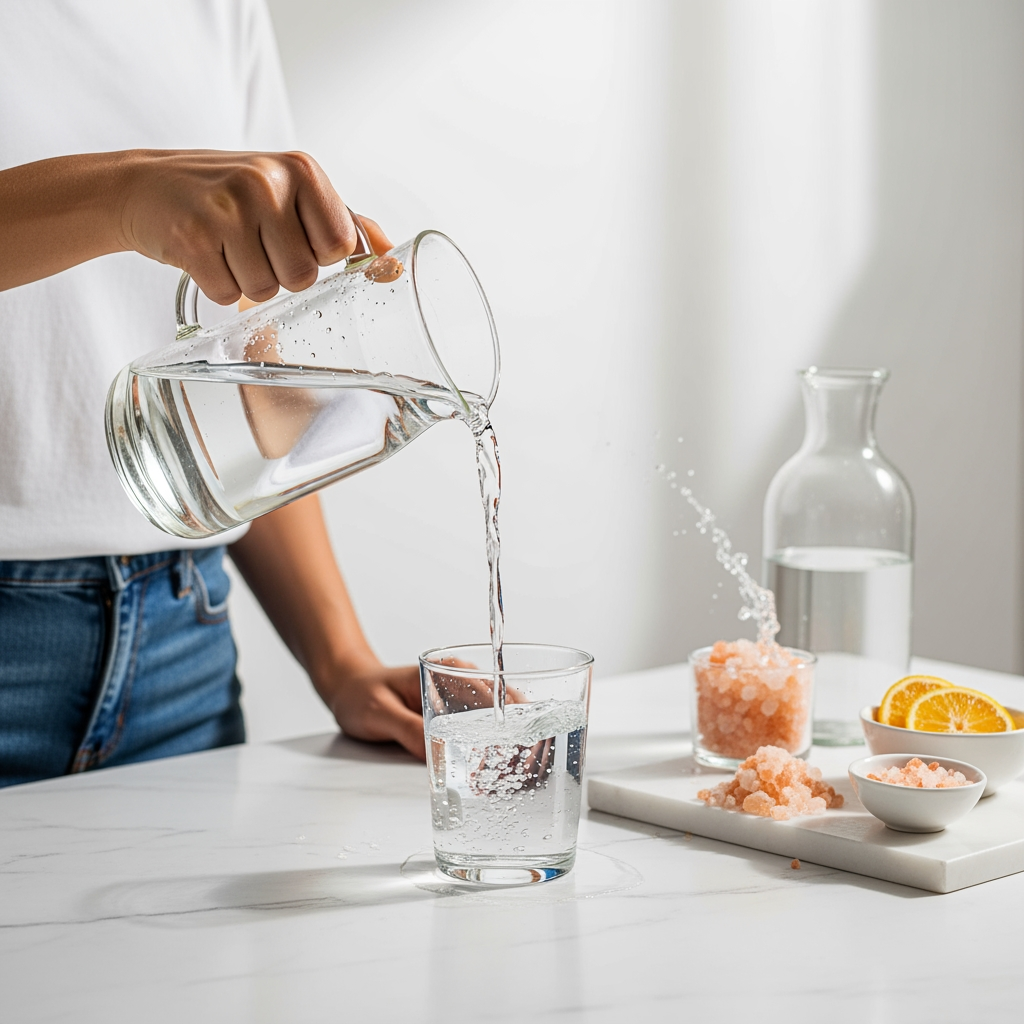
You've heard it a thousand times: drink more water. It's the most generic health advice on the planet — and it's not wrong, exactly. But if you're active, if you train hard, if you spend time in heat, or if you've ever finished a workout feeling foggy and flat despite downing a liter of water, you already know there's more to the story.
The truth is that hydration isn't just about volume. It's about what's in the water — specifically, the electrolytes that determine whether that fluid stays in your bloodstream or ends up in your bladder twenty minutes later.
🔑 Key Takeaways
- Water alone isn't enough for optimal hydration. Electrolytes — particularly sodium — help your body retain and distribute the fluid you drink.
- Even mild dehydration (2% body mass loss) can impair attention, executive function, and motor coordination, according to a 2018 meta-analysis.
- Sodium-containing beverages retain fluid better than plain water after exercise-induced dehydration, per 2023 research published in Nutrients.
- Sweat losses are highly individual. Some athletes lose 2–3× more sodium than others in identical conditions, making blanket recommendations unreliable.
- Practical hydration means matching intake to output — not just hitting an arbitrary daily water target.
The Science: What Happens When You Undershoot
When you sweat, you don't just lose water. You lose sodium, potassium, calcium, and magnesium — electrolytes that regulate fluid balance, nerve signaling, and muscle contraction. Replacing the water without replacing these minerals dilutes what's left in your blood, which is why chugging plain water after intense exercise can leave you feeling worse, not better.
A 2018 meta-analysis by Wittbrodt and colleagues compiled data from 33 studies on dehydration and cognitive performance. The findings were clear: when fluid loss exceeded 2% of body mass, performance on tasks involving attention, executive function, and motor coordination consistently declined. At deficits below 2%, effects were more variable — but the trend was still negative, particularly for tasks requiring sustained focus.
The physical side tells a similar story. A 2023 review in Nutrients examining beverage composition for exercise hydration concluded that hypohydration impairs aerobic performance and can deteriorate cognitive function during exercise. The authors noted that athletes are best served by beginning exercise in a euhydrated state and consuming fluids containing sodium during prolonged sessions — not plain water alone.
On the rehydration side, a 2023 study published in Nutrients compared oral rehydration solutions and sports drinks for post-exercise fluid retention. Drinks containing higher sodium concentrations retained significantly more fluid than low-sodium alternatives. The mechanism is straightforward: sodium pulls water with it through the gut and into circulation. Without adequate sodium, a large fraction of ingested water is rapidly excreted.
Practical Steps: Hydration That Actually Works
1. Know your sweat rate
Weigh yourself before and after a typical training session (after toweling off, in minimal clothing). Each kilogram of weight lost represents roughly one liter of fluid. If you lost 1.5 kg in an hour-long session, your sweat rate is ~1.5 L/hr — and that's what you need to replace, not some generic "8 glasses a day" number.
2. Add sodium to your post-workout fluid
Research consistently shows that sodium-containing beverages retain fluid more effectively than plain water. For most active individuals, adding 300–500 mg of sodium (roughly 1/4 to 1/2 teaspoon of salt) to your post-workout water is sufficient. If you're a heavy sweater or training in heat, you may need more. A simple pinch of salt and a squeeze of lemon works as well as most commercial drinks.
3. Front-load your day
You wake up mildly dehydrated — typically 1–2% below baseline after a night's sleep. Starting your morning with 16–20 oz of water (ideally with a small amount of sodium or electrolytes) before coffee or food helps re-establish fluid balance before the day's demands compound the deficit.
4. Don't overdrink
More isn't better. Excessive plain water consumption without electrolytes can lead to hyponatremia — dangerously low blood sodium — which is more dangerous than mild dehydration. Drink to thirst, match intake to output, and stop treating hydration as a volume competition.
5. Watch the color, not the count
Urine color is a more useful real-time indicator than any formula. Pale straw to light yellow generally indicates adequate hydration. Dark yellow means you're behind. Completely clear means you may be overhydrating — and potentially diluting your electrolytes.
How Supplements Fit
If you're eating a balanced diet and training moderately, you can cover your electrolyte needs through food — salt your food to taste, eat potassium-rich produce, and drink water with meals. But if you train hard, sweat heavily, live in a hot climate, or struggle to eat enough throughout the day, a supplement can help bridge the gap.
Evoria Health's Daily Essentials includes an electrolyte hydration complex — potassium, magnesium, calcium, and pink Himalayan salt — alongside its broader vitamin, mineral, and probiotic formula. It's not a sports drink replacement for during-exercise use, but it can support baseline electrolyte status as part of your daily nutritional foundation. The key point: consistent daily intake matters more than any single post-workout chug.
FAQ
How much water should I drink per day?
There's no universal number. A reasonable starting point is 2.5–3.5 liters per day for most adults, but your actual needs depend on body size, activity level, climate, and sweat rate. Use urine color as your real-time guide — pale straw to light yellow indicates adequate hydration.
Do I need electrolytes if I only exercise for 30 minutes?
For sessions under 45–60 minutes at moderate intensity, plain water is generally sufficient. Electrolyte supplementation becomes more relevant for longer sessions, high-intensity training, hot environments, or if you're a notably heavy sweater. For most people, meals consumed throughout the day replace the modest electrolyte losses from shorter workouts.
Is coconut water a good hydration drink?
Coconut water contains potassium but is relatively low in sodium — the electrolyte most critical for fluid retention after sweating. It's fine as part of your overall fluid intake, but research suggests sodium-containing beverages are more effective for post-exercise rehydration than potassium-dominant options alone.
Can I just take salt tablets instead of a sports drink?
Salt tablets can work, but they're easy to overdo. The advantage of a balanced electrolyte beverage is that the fluid and minerals are delivered together, which supports more consistent absorption. If you use salt tablets, pair them with adequate water and be mindful of total sodium intake from all sources.
Does caffeine dehydrate you?
Moderate caffeine intake (3–4 cups of coffee per day) does not cause meaningful dehydration in habitual caffeine consumers. Caffeine has a mild diuretic effect, but regular consumption leads to tolerance, and the fluid in coffee and tea contributes to your daily intake. The net effect on hydration is close to neutral for most people.
Ready to put the science into practice?
Evoria's Daily Essentials provides a comprehensive foundation of essential nutrients to support whole-body balance and vitality. Shop Daily Essentials →
References
- Wittbrodt MT, Millard-Stafford M. Dehydration Impairs Cognitive Performance: A Meta-analysis. Medicine & Science in Sports & Exercise. 2018;50(5):1011-1027. PMID: 29933347
- Maughan RJ, et al. Compositional Aspects of Beverages Designed to Promote Hydration Before, During, and After Exercise: Concepts Revisited. Nutrients. 2023;15(14):3138. PMCID: PMC10781183
- Hew-Butler T, et al. Post-Exercise Rehydration in Athletes: Effects of Sodium and Carbohydrate in Commercial Hydration Beverages. Nutrients. 2023;15(20):4364. PMCID: PMC10674530
*These statements have not been evaluated by the FDA. This product is not intended to diagnose, treat, cure, or prevent any disease.
Share:
Digital Detox and Sleep: What Screens Actually Do to Your Recovery
Curcumin Bioavailability: Why Most Turmeric Supplements Underdeliver